
Conditions We Treat
Back pain and hip pain often overlap and can be difficult to distinguish. A one-on-one evaluation helps assess whether the spine, hip joint, or surrounding muscles may be contributing.
One-on-One Care
Back and hip pain can make sitting, standing, walking, and everyday movement difficult. Your therapist assesses what may be contributing to your symptoms — the spine, hip joint, or surrounding muscles — and plans treatment with you, one-on-one.
Bowel or bladder changes, numbness in the saddle area, or leg weakness that is rapidly getting worse. These need same-day medical care — not a therapy appointment.
Treatment
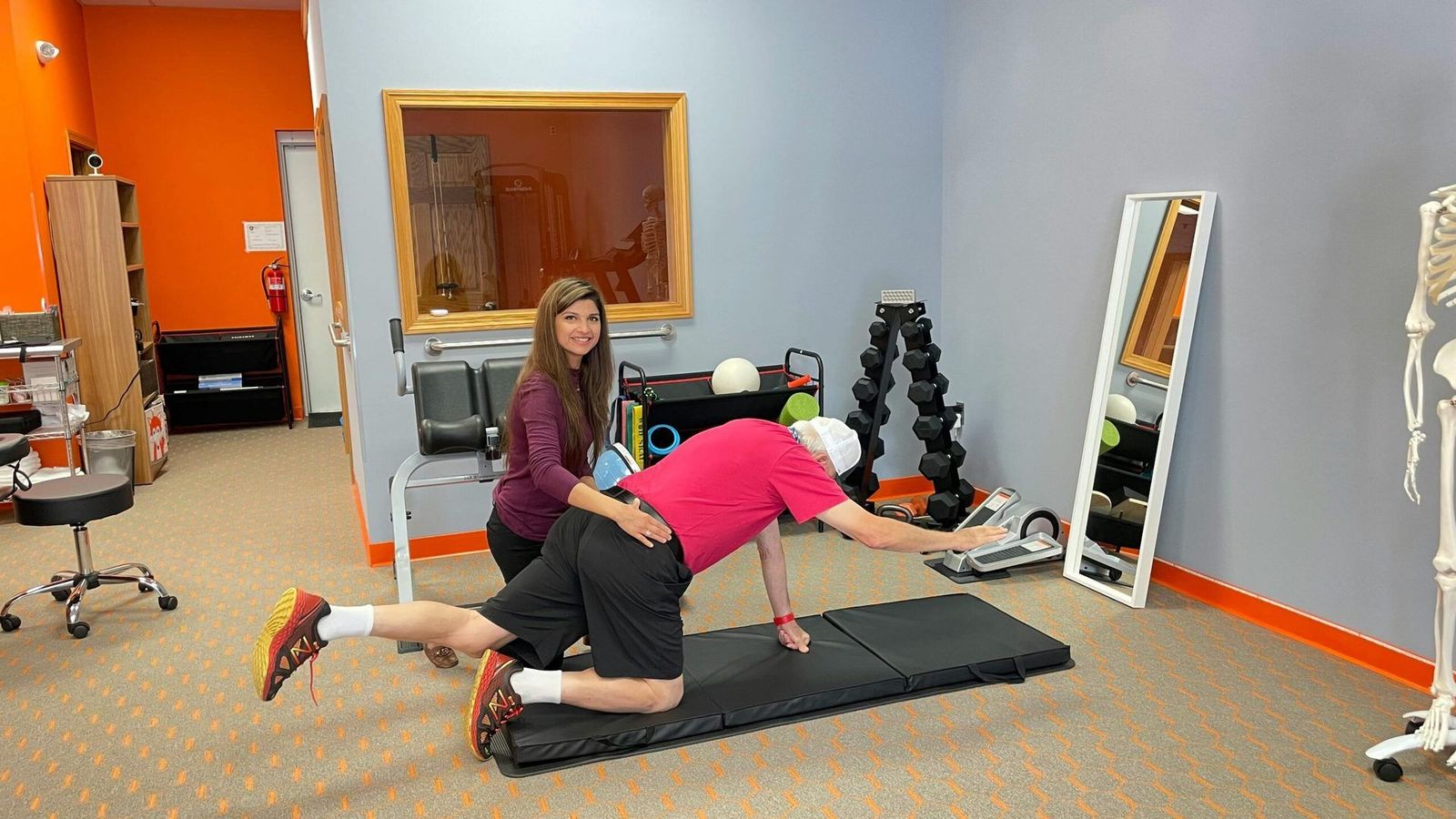
Treatment is built around what your evaluation finds — and may include manual therapy, trunk and hip strengthening, movement retraining, and positions that calm symptoms at home.
Pain over the outer hip that makes it hard to sleep on that side is often bursitis or greater trochanteric pain — irritation where hip and thigh muscles attach. It is treated with the same evaluation-first approach: manual therapy, graded strengthening of the hip muscles, and changes to the positions and loads that provoke it.
The sacroiliac (SI) joints connect your spine to your pelvis. When one is irritated, pain usually sits below the belt line on one side and can mimic back or hip problems — one more reason the evaluation comes before the treatment plan.